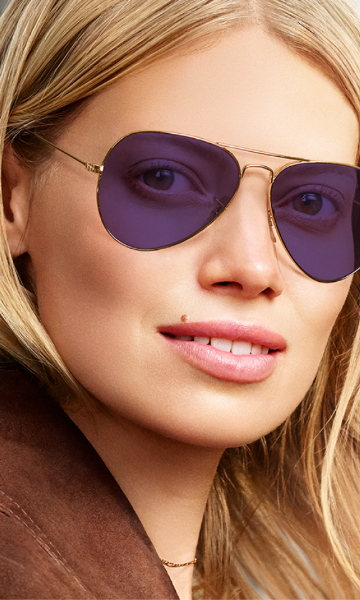
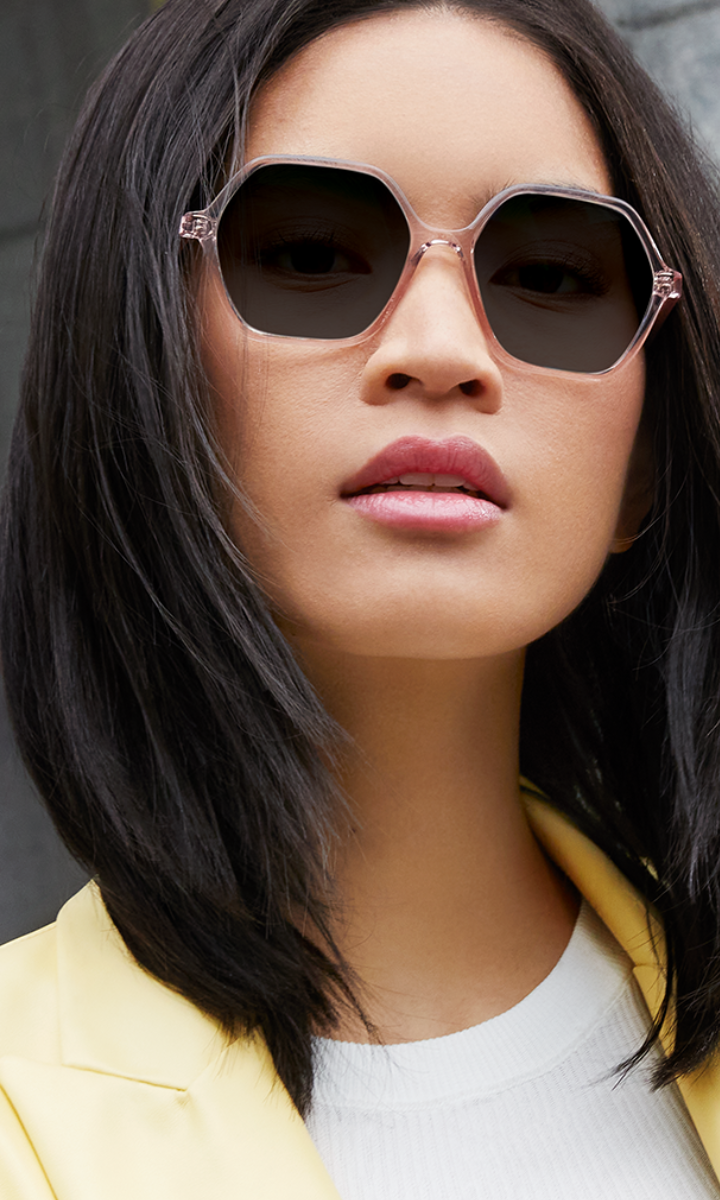
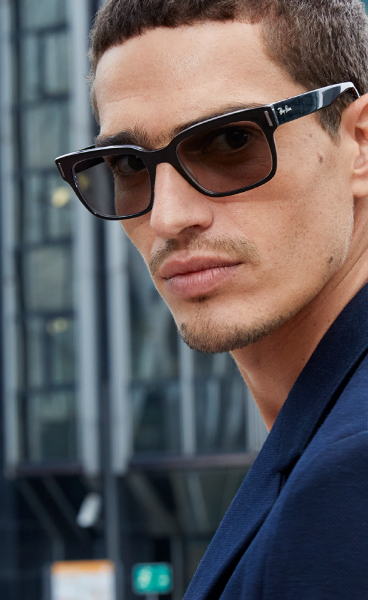
Transitions lenses block 100% of UVA and UVB rays and help to filter potentially harmful blue lightiv for adults and children.
Learn the factors that affect the cost of Transitions® lenses
and
explore the advantages of enrolling in vision insurance.
Learn the factors that affect the cost of Transitions® lenses and explore the advantages of enrolling in vision insurance.
The price of Transitions lenses is set by the retail store or eyecare professional's office where you purchase your lenses. Transitions lenses are only one part of your total lens and eyeglass purchase, and many practices offer discounts when you purchase Transitions lenses with other premium lens or frame options.
The final price depends on the lens material, your prescription, any features you add and which Transitions brand lens product you choose.
Check with your insurance provider to understand your coverage before your exam. Most leading vision care plans—such as Anthem, EyeMed, VSP, and Versant Health's Davis and Superior plans—cover Transitions lenses for a fixed co-pay that may vary based on your plan's details. And some offer Transitions lenses to kids for free.
Enrolling in a vision benefits plan that covers a comprehensive eye exam and premium lenses like Transitions that protect your sight is important to help maintain good eye and overall health. Annual eye exams can help to detect many common eye conditions and can also be the first step in diagnosing serious overall health conditions, like diabetes and high blood pressure.
The cost of protecting your sight is low compared to the cost of eye and health problems that can impact your life.
FACTORS INFLUENCING PRICING OF TRANSITIONS LENSES
LENS MATERIAL
Do you need impact resistant lenses or ultra-thin ones (especially if you have a high prescription)? Or do standard plastic lenses work just fine for you?
COATINGS
Do you need an anti-reflective coating for reducing reflections from the front of your lenses, reducing glare from headlights, streetlights, computers or TV screens? Do you want scratch resistance for sports?
LENS TYPE
Do you need lenses just for reading? Do you need a single distance vision correction or a multi-focus one?
TRANSITIONS SELECTION
Do you need darker lenses for extra protection? Or do you want polarization that adjusts to match the level of outdoor glare for crisper, sharper vision outdoors?
EYE EXAMS CAN HELP SAVE YOUR SIGHT
Common eye diseases that can be detected through an eye exam include:
The leading cause of vision impairment, cataract occurs when the lens of the eye becomes cloudy. As you age, your risk for developing cataract can increase. Other risk factors include family history, ethnicity, smoking and sun exposure.
Also commonly known as the silent thief of sight—glaucoma usually has little or no early warning signs. People with glaucoma gradually lose their peripheral (side) vision. Initial symptoms can range from blurred vision and headaches to no symptoms at all. Age, family history and ethnicity can all increase risk.
AMD painlessly destroys sharp, central vision. It is the leading cause of blindness among Caucasian Americans over the age of 40. While anyone can be affected by AMD, it is more common among women. Additionally, long term exposure to harmful blue light has been linked to increased risk of developing AMDi.
FIND THE TRANSITIONS LENS FOR YOU
i. Arnault E. Barrau C, Nanteau C. Gondouin P, Bigot K, et al. Phototoxic Action Spectrum on a Retinal Pigment Epithelium Model of Age-Related Macular Degeneration, PlosOne 8 (2013).
ii. Transitions Optical, Global Consumer Sentiment and Behavior, Multi-country survey (AR, AU, CO, FR, IT, SG, ZA, UK, US), Q4 2020, People Research, N=6,403, N=700 per country - Eyeglasses wearers agree to say Top2Boxes.
iii. “Harmful blue light” (380nm - 460nm) is calculated across materials and iconic colors. GEN 8 blocks at least 20% indoors and over 87% outdoors. Transitions® Signature® lenses style colors block over 75% outdoors. “standard clear lens” refers to typical clear 1.5 and polycarbonate hard-coated lenses without blue light reducing treatment. In polycarbonate material: 1.6x more indoors and 6.7x more outdoors.
iv. “Harmful blue light” is calculated between 380nm and 460nm. “standard clear lens” refers to typical clear 1.5 and polycarbonate (2.5x more indoors and 7.0x more outdoors) hard-coated lenses without blue light reducing treatment. Tested outdoors at 23C. Transitions XTRActive® new generation block up to 34% indoors and up to 90% outdoors.
v. Blocks 34% of harmful blue light indoors. Protection from harmful blue light (380nm-460nm) at 23°C among polycarbonate and 1.5 grey lenses in the clear to extra dark photochromic category.
vi. Transitions® Signature® GEN 8TM block at least 20% of harmful blue light indoors & over 87% of harmful blue light outdoors except Transitions Signature lenses style colors which block over 75% outdoors. “Harmful blue light” is calculated between 380nm and 460nm.